
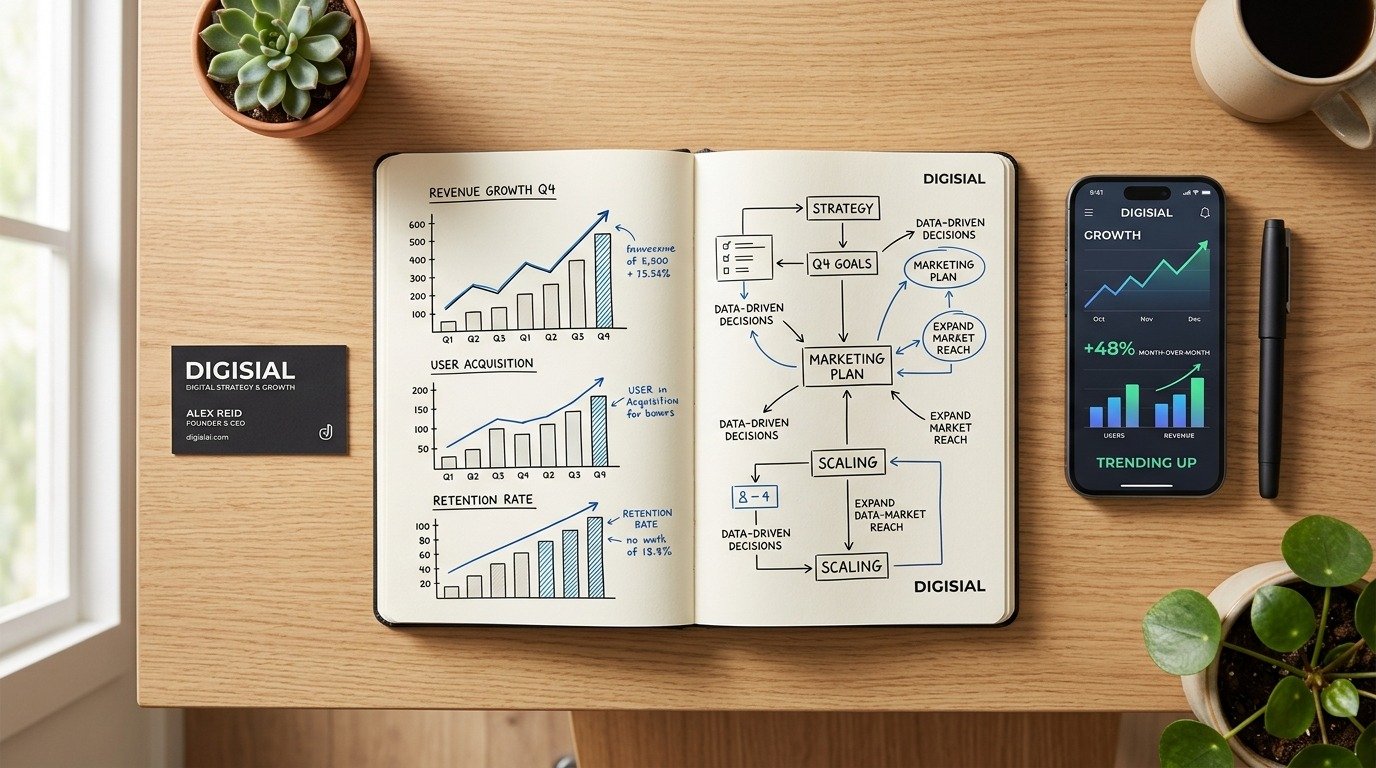
Business growth is not simply about increasing sales or making more profit. It is about building a strong foundation that allows a business to expand consistently, attract the right customers, and remain competitive in a fast-changing market. In 2026, the business environment is more digital, competitive, and customer-focused than ever before. Businesses that fail to adapt to modern strategies often struggle to survive, while those that embrace digital transformation grow rapidly.
Today, customers are more informed, connected, and selective. They do not just buy products or services; they buy trust, experience, and value. This is why business growth now depends heavily on online presence, marketing strategies, branding, and customer engagement systems. Whether you are running a small startup or an established company, understanding the right growth strategies is essential for long-term success.
1. Build a Strong Online Presence
In the modern digital era, an online presence is the first and most important step toward business growth. Before trusting any business, customers search online to check credibility, reviews, and professionalism. If your business is not visible online, you are automatically losing potential customers.
A strong online presence includes a professional website, active social media profiles, and a verified Google Business Profile. A website acts as your digital identity where customers can learn about your services, products, pricing, and contact details. Social media platforms help in building engagement and brand awareness, while Google Business improves local visibility and trust.
Businesses that invest in building a strong online identity gain more visibility, trust, and long-term customer relationships compared to those that rely only on offline methods.
2. Focus on Digital Marketing Strategies
Digital marketing has become the backbone of business growth in 2026. Unlike traditional marketing, digital marketing allows businesses to target specific audiences, track performance, and scale quickly with measurable results.
The most effective digital marketing strategies include Search Engine Optimization (SEO), social media marketing, content marketing, and paid advertising such as Google Ads and Facebook Ads.
SEO helps your business rank higher on search engines, making it easier for customers to find you organically. Social media marketing builds brand awareness and customer engagement. Content marketing educates your audience and builds authority in your industry. Paid ads help generate instant traffic and leads.
When all these strategies are combined effectively, they create a powerful system that drives consistent business growth and increases revenue over time.
3. Create a High-Converting Website
A website is not just a digital brochure; it is a powerful sales machine. A well-designed website can convert visitors into paying customers if built correctly. In 2026, businesses without a professional website are considered less trustworthy compared to those with a strong online platform.
A high-converting website should be fast, mobile-friendly, visually appealing, and easy to navigate. It should clearly present your services, highlight your strengths, and guide visitors toward taking action, such as contacting you or making a purchase.
Important elements of a successful website include fast loading speed, responsive design for mobile users, clear service sections, strong call-to-action buttons, and trust-building elements like testimonials and case studies.
At Digisial, the focus is on creating conversion-driven websites that are not only visually attractive but also strategically designed to generate leads and sales for businesses.
4. Understand Your Target Audience
One of the most critical factors in business growth is understanding your target audience. Businesses that clearly understand their customers are more likely to succeed because they can create better products, services, and marketing strategies.
To understand your audience, you need to analyze their needs, problems, interests, and buying behavior. Ask questions like: What problems are they facing? What solutions are they looking for? What motivates them to make a purchase?
Once you understand your audience deeply, you can tailor your marketing messages, improve customer experience, and build stronger relationships. This leads to higher customer satisfaction and long-term loyalty, which is essential for sustainable growth.
5. Leverage Automation and Technology
Technology plays a major role in scaling modern businesses. Automation tools help save time, reduce manual effort, and improve efficiency. In 2026, businesses that use automation are significantly ahead of their competitors.
Examples of automation include email marketing systems, customer relationship management (CRM) software, chatbots, and automated social media posting tools. These systems allow businesses to operate more efficiently while focusing on strategic growth instead of repetitive tasks.
Automation not only improves productivity but also enhances customer experience by providing faster responses and better service management.
6. Invest in Branding and Identity
Branding is what makes your business unique and memorable. A strong brand builds trust, recognition, and emotional connection with customers. In a competitive market, branding can be the difference between success and failure.
Branding includes your logo, color scheme, typography, messaging style, and overall visual identity. Consistency across all platforms helps build a professional image and increases customer trust.
Businesses with strong branding are more likely to attract loyal customers, charge premium prices, and stand out in crowded markets.
7. Focus on Customer Experience
Customer experience is one of the most powerful factors influencing business growth. A satisfied customer not only returns but also recommends your business to others.
Providing excellent customer service, quick responses, and a smooth buying process improves customer satisfaction. Businesses that prioritize customer experience build stronger reputations and long-term success.
Simple improvements like better communication, faster delivery, and after-sales support can significantly increase customer loyalty and retention.
Conclusion
Business growth in 2026 is driven by digital transformation, smart marketing strategies, and customer-focused systems. Success is no longer dependent on traditional methods alone but on how effectively a business adapts to modern tools and online platforms.
A strong online presence, effective digital marketing, high-converting websites, and excellent customer experience are the key pillars of growth. Businesses that invest in these areas position themselves for long-term success and scalability.
If implemented correctly, these strategies can help any business grow from a small startup into a strong and competitive brand in the digital marketplace.
